
Uncategorized
Travel Packing Essentials Checklist: Suitcases, Bags & Accessories
Aug
Packing well isn’t just about folding clothes neatly. It’s about matching your bag, your gear, and your accessories to where you’re staying and what you’ll do each day. A weekend in a hotel needs a different kit than a week bouncing between hostels. This guide walks through travel packing essentials, suitcases, bags, and accessories, and ties each choice back to your accommodation and itinerary. That way you land with exactly what you need and nothing you don’t.
How to Choose the Right Suitcase or Bag for Your Trip
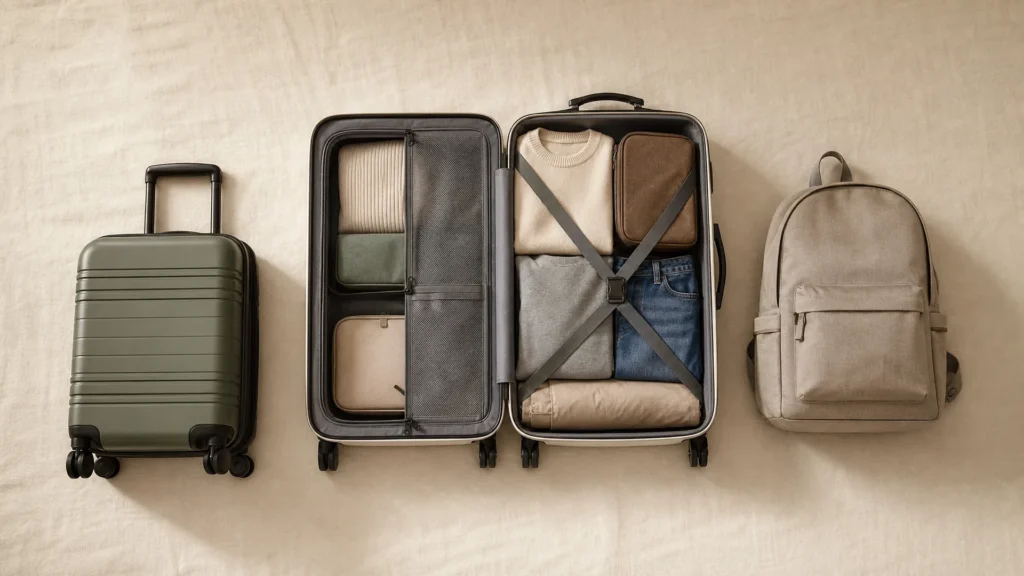
The right suitcase depends on trip length, destination, and how many times you’ll move between cities. Hardside suitcases protect fragile items and resist weather. Softside bags flex into tight overhead bins and expand slightly when you overpack. Wheeled suitcases suit smooth airport floors and hotel lobbies. Backpacks work better on cobblestones, hostel stairs, or multi-city train trips.
Think about how often you’ll carry your bag versus roll it. If you’re changing accommodation every night or two, a backpack or a compact wheeled bag saves your arms and your patience.
Best Travel Suitcases by Trip Length
For a weekend trip, a carry-on suitcase or a soft duffel is usually enough. For a week-long holiday, a mid-size checked suitcase or a larger carry-on with packing cubes gives you room without overcommitting. For two weeks or longer, or for trips covering multiple climates, a larger checked suitcase or a 65-70L backpack makes more sense, especially if you’ll do laundry less often.
Matching bag size to trip length also matters at the airport. A bag that’s slightly too big tempts you to overpack. That’s how you end up paying for a checked bag you didn’t plan for.
Lightweight Travel Bags for Carry-On Only Trips
Carry-on packing tips start with the bag itself. Look for lightweight travel bags under about 2.5kg empty, so more of the airline’s weight allowance goes to your actual belongings. Structured carry-ons with a laptop sleeve suit business trips. Soft-sided expandable ones flex better for holidays with souvenirs.
A one-week Europe trip with only a carry-on suitcase and a packable day bag avoids checked-bag fees entirely. It also speeds up airport transfers between cities, which matters if you’re planning a Barcelona and London itinerary with a tight connection between flights.
Travel Accessories Checklist: Chargers, Cables, and Organisers
Beyond the bag itself, a short list of small accessories makes a trip run smoother. Packing cubes keep clothes compressed and easy to find, so you’re not unpacking your whole suitcase to find one t-shirt. A luggage tracker gives peace of mind if your bag ever gets delayed or misrouted. A compact first-aid kit and a spare tote bag for day trips round out a solid travel accessories checklist.
Universal Travel Chargers and Adapters
Universal travel chargers and adapters are non-negotiable for international trips. A single universal adapter with USB-A and USB-C ports covers most phones, cameras, and laptops without needing separate plugs for every country. Check the voltage rating on any hairdryer, straightener, or other higher-power appliance before plugging it in abroad. Not all adapters convert voltage; most only change the plug shape.
Portable Chargers for Travel Days
Portable chargers matter most when you’re out sightseeing from morning to night, relying on your phone for maps, tickets, and photos. A 10,000mAh power bank covers a full day of heavy phone use for most travellers. If you’re travelling with a group, a slightly larger shared power bank with multiple ports can save weight compared to everyone carrying their own.
Packing Differently for Hotels, Airbnbs, and Hostels
Where you stay changes what you need to pack. Hotels handle towels, toiletries, and daily cleaning, so you can travel lighter. Airbnbs and hostels shift more of that responsibility onto you, which means your packing list needs to grow to match.
Hotel vs Airbnb Packing Differences
Hotel vs Airbnb packing differences come down to what’s provided. A hotel stay usually includes shampoo, soap, towels, and often a hairdryer, so you can leave those at home. An Airbnb rarely guarantees any of that. Pack your own toiletries, a travel towel, and basic kitchen items like a sponge, dish soap, and a few spices if you plan to cook. Many apartments arrive under-stocked.
If you’re still deciding between the two, it’s worth comparing what each option actually includes before you finalise your packing list. You can compare live hotel prices before you pack to see what’s included at your price point.
What to Pack for a Hostel Stay
Hostel stays typically mean shared bathrooms and lockers. Packing a quick-dry towel, flip-flops, and a small padlock matters far more than it would for a hotel stay with daily housekeeping. Earplugs and an eye mask help with shared dorm rooms. A lightweight day bag doubles as extra security for valuables when lockers are small.
Packing a Day Bag for Sightseeing and Museum Visits
A good museum and sightseeing day bag is separate from your main suitcase and built for comfort over long walking hours. Look for a compact size that fits under museum cloakroom rules, since many galleries limit bag size for security reasons.
Security pockets matter in busy tourist areas, so choose a bag with a zipped compartment against your back rather than an open top pocket. Pack a reusable water bottle, a portable charger, a light layer for air-conditioned museums, and any tickets or museum passes you’ve booked in advance. Comfortable straps matter more than style once you’ve clocked up ten kilometres of walking in a single day.
Smart Packing to Avoid Stress and Extra Baggage Fees
Many airlines now charge between $35 and $75 each way for a checked bag. Packing everything into a carry-on-sized suitcase can save well over $100 on a round trip with a layover or connection. That saving adds up fast if you’re travelling as a couple or family, since the fee applies per bag, per person, per flight.
Planning your luggage and accessories around your actual accommodation and itinerary cuts overpacking at the source. If you know your hotel provides towels and toiletries, you don’t need to pack them “just in case.” If you know you’ll be walking for hours between museums, pack a smaller day bag instead of stuffing everything into one bulky tote. Fewer decisions at the packing stage means fewer surprises at the check-in counter.
It also helps to think about flights early. If you already know the best time to book flights for the lowest price, you can lock in your dates and then plan your packing list around a confirmed itinerary rather than guessing.
Matching Your Packing List to Where You’ll Stay
Once you’ve decided how you’ll pack, the next step is confirming where you’ll actually stay. We compare live hotel, hostel, and Airbnb-style prices side by side, so travellers can decide on accommodation type before finalising how much luggage they’ll actually need. A hotel with daily housekeeping calls for a lighter bag. A week in an apartment calls for more kitchen basics and toiletries. A hostel run calls for locks, flip-flops, and a quick-dry towel.
Before you zip up your suitcase for good, take a few minutes to check your options. You can compare cheap flight sites for your route, or look at bundling your flight and hotel search to lock in both at once. Either way, matching your packing style to your actual accommodation, rather than guessing, is what keeps a trip stress-free from the airport all the way to check-in.
