
Uncategorized
Foldable Hiking Backpack: Features and Packing Tips
Aug
Packing for a trip that mixes city streets with mountain trails used to mean choosing between a suitcase and a rucksack. A foldable hiking backpack solves that problem. It packs down small enough to slip into your main luggage. Then it unfolds into a proper daypack the moment you reach the trailhead. If you want one bag that does two jobs, it’s worth understanding how these packs actually work before you buy one.
What Is a Foldable Hiking Backpack and Who Needs One?
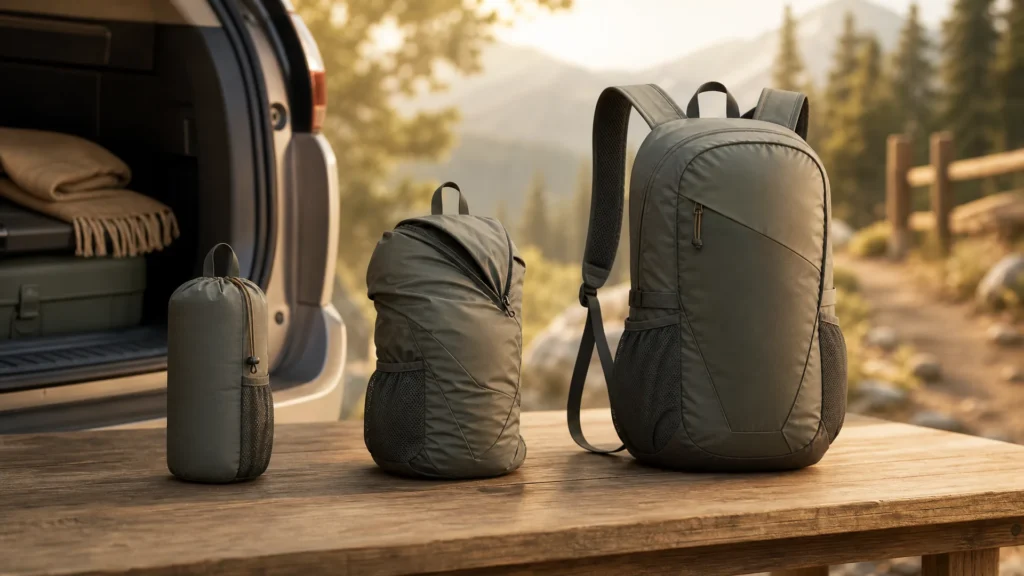
A foldable hiking backpack is a lightweight daypack built to collapse into a small pouch, often no bigger than a water bottle, when it’s empty. Most models fold or roll into an integrated stuff sack, so there’s no loose fabric flapping around your suitcase. Unfold it, and you get a full-sized backpack with shoulder straps, a main compartment, and usually a few smaller pockets.
This matters most for travellers who don’t want to dedicate a whole suitcase to hiking gear. Say your trip involves a few days of sightseeing followed by a day hike, or a city break with a side trip to a national park. A foldable pack means you don’t have to choose. It rides in your luggage as dead weight until you need it, then becomes your main bag for the day.
It’s a practical solution rather than a specialist one. It won’t replace serious mountaineering equipment. But for a trip where hiking is one part of a longer itinerary, it earns its space.
Foldable vs Traditional Frame Backpacks
Traditional hiking backpacks use internal or external frames to support heavier loads and keep the pack’s shape stable on rough terrain. That structure helps on multi-day treks with a lot of gear, but it adds bulk and weight you carry even when the pack is empty.
A foldable hiking backpack skips the frame almost entirely. Instead of rigid support, it relies on lightweight fabric and simple padding to keep its shape. That trade-off means less structure and usually a lower maximum comfortable load. In exchange, you get a pack that takes up next to no space when you’re not using it. For day hikes and light overnight use, most people won’t notice the missing frame. For serious multi-day backcountry trips with heavy loads, a framed pack still makes more sense.
Key Features to Look for in a Foldable Hiking Backpack
Not all foldable packs are built the same way. It helps to know what separates a genuinely useful travel companion from a flimsy add-on.
Capacity and Compression
Most foldable hiking backpacks fall somewhere between 15 and 35 litres. Anything smaller starts to feel like a large daypack rather than something you’d hike with. Anything larger tends to lose the “folds into nothing” advantage that makes this category useful in the first place.
A 15 to 20 litre pack suits a short day hike: water, snacks, a layer, a first aid kit. A 25 to 35 litre pack gives you room for a packed lunch, a camera, rain gear, and maybe a change of clothes if you’re staying out longer. Compression straps matter here too. They let you cinch down the pack when it’s half full, so the load doesn’t shift around and bang against your back on uneven ground. A good compression system is often the difference between a pack that feels stable and one that feels like a sack of loose gear.
Fabric Durability and Water Resistance
The material is where most of the quality difference sits. Ripstop nylon is the standard choice for foldable packs. It’s light, it packs down small, and the reinforced weave stops small tears from spreading into big ones. It’s not indestructible, but for typical trail use, it holds up well over repeated trips.
Heavier canvas packs trade packability for toughness. They resist abrasion better and often feel more durable against rocks and rough ground. But they’re bulkier to fold and heavier to carry, which works against the whole point of a packable design.
Water resistance is worth checking separately from the fabric itself. Many packable bags use a water-resistant coating rather than a fully waterproof one. That’s fine for light rain, but it won’t protect against a sustained downpour or a stream crossing. If you’re hiking somewhere with unpredictable weather, pack a separate rain cover as backup regardless of what the pack claims.
Strap comfort is easy to overlook when you’re folding the pack flat in a shop, but it matters most once it’s loaded. Padded, adjustable shoulder straps and a sternum strap help distribute weight evenly, even on a frameless pack. They make a real difference over a few hours of walking.
How a Foldable Hiking Backpack Fits Airline Baggage Rules
One of the most practical reasons travellers choose a foldable hiking backpack has nothing to do with hiking at all. It’s about how the pack behaves at the airport.
A foldable daypack that compresses into its own pocket-sized pouch can save several litres of luggage space compared with a rigid-frame backpack. That matters when airlines cap carry-on dimensions. Instead of packing a separate empty daypack that eats a chunk of your suitcase, you fold it flat and tuck it into a corner. It only takes its full shape once you actually need it for a hike.
There’s a second advantage too. A foldable backpack that doubles as an under-seat personal item can help you avoid a separate checked-bag or carry-on fee on budget airlines. Since it folds flat, you can also stuff it into your main suitcase on the outbound flight and use it as your personal item on the way home, once it’s holding souvenirs or extra layers.
Carry-On and Personal Item Sizing
Personal item allowances vary by airline, so check the specific carrier before you fly. As a general guide, many budget carriers restrict personal-item dimensions to roughly 40 x 20 x 25 centimetres. A foldable pack that compresses flat is more likely to fit under the seat without extra fees. Because a foldable pack has little to no rigid frame, it’s also easier to squeeze into that space than a structured daypack, even when it’s reasonably full.
If your trip involves multiple flights or budget airlines with strict baggage rules, it’s worth working through a full travel packing essentials checklist before you pack. That way your foldable backpack fits your overall luggage plan rather than becoming an extra bag you have to explain at the gate.
Packing Tips for Multi-Day Hikes With a Foldable Pack
A foldable hiking backpack works best for day hikes, but it can support a light multi-day trip too, provided you’re realistic about what it can carry. It’s not built for heavy backcountry camping gear. But it handles a hut-to-hut trip, or a multi-day hike with a hotel or lodge base at each end, reasonably well.
Layering and Weight Distribution
Pack heavier items, like water and food, close to your back and centred between your shoulder blades. This keeps the pack’s centre of gravity stable, which matters more on a frameless pack than a structured one. Lighter items, such as an extra layer or a rain jacket, sit further out or on top, where you can reach them quickly.
Layering also applies to clothing, not just gear. Pack a base layer, an insulating layer, and a waterproof shell rather than one bulky jacket. It’s a more efficient use of space in a smaller pack, and it lets you adjust as the weather or your effort level changes through the day.
What to Leave at the Hotel
The easiest way to keep a foldable pack light on a multi-day trip is to use your hotel as a base and only carry what that day’s hike actually needs. Leave a spare change of clothes, toiletries, chargers, and any bulky items in your room rather than hauling them up a mountain.
This works well for the kind of trip covered in city-and-hike itinerary ideas, where you spend a couple of nights in a city, take a day trip to hike nearby, then move on. Your suitcase stays at the hotel or in luggage storage. Your foldable pack carries the day’s essentials. You’re not lugging a full pack through cobbled streets or airport terminals.
Choosing the Right Foldable Hiking Backpack for Your Trip Style
The right size and features depend on how you actually travel, not just how far you plan to hike.
A weekend hiker who’s mostly doing city breaks with the occasional trail day is usually best served by a smaller 15 to 20 litre pack. It folds down small, slips easily into a carry-on, and covers a few hours on foot without fuss.
Someone doing a longer backpacking trip with multiple hiking days benefits from a 25 to 35 litre foldable pack, ideally with stronger compression straps and more durable fabric, since it’ll see more repeated use across the trip.
Families travelling together often need a slightly different approach. A foldable pack works well as one adult’s daypack for carrying snacks, sunscreen, and spare layers for kids, while the rest of the group’s gear stays in checked luggage. If you’re weighing up the wider cost of a trip like this, it’s worth looking at budget family vacation packages that already build in some flexibility for day trips and activities.
Whichever pack you choose, it’s only one piece of the planning. Once your gear is sorted, the bigger savings usually come from timing and comparing your flights and hotels. Looking into the best time to book flights for less, or running a quick check to compare cheap flight sites, can do more for your budget than any single item of gear. TravelCutPrice’s free meta search tool lets you compare flights and hotels for your next hiking trip in one place. That way the packing decisions, like which foldable hiking backpack to buy, fit into a wider plan rather than standing alone.
